by Westford Real Estate Inc | Nov 6, 2026 | Uncategorized
Buying a home is an exciting milestone, but the process involves more than choosing a property you love. From understanding your budget to reviewing inspections and negotiating an offer, each step requires careful consideration.
Whether you are purchasing your first property or moving into a new home, having a clear plan can help you avoid common mistakes and make informed decisions.
Here are eight essential tips to consider before making your next home purchase.
1. Determine What You Can Comfortably Afford
Before browsing properties, establish a realistic home-buying budget.
Consider your income, monthly expenses, existing debt, savings, and other financial commitments.
Remember that the purchase price is only part of the cost. Property taxes, homeowners insurance, utilities, maintenance, and potential homeowners association fees can increase your monthly expenses.
Choose a budget that allows you to manage these costs without putting unnecessary pressure on your finances.
2. Review Your Credit and Explore Mortgage Options
Your credit profile can influence the mortgage programs and interest rates available to you.
Review your credit reports, address any inaccuracies, and make payments on time.
Research different mortgage options and compare lenders before making a decision. Ask about interest rates, annual percentage rates, closing costs, loan terms, and down payment requirements.
Understanding your financing options early can help you plan more effectively.
3. Get Mortgage Preapproved
A mortgage preapproval can provide a clearer picture of how much a lender may be willing to finance based on an initial review of your financial information.
It can also help you focus your property search within a realistic price range.
Keep in mind that preapproval is not a final loan commitment. Lenders will still need to verify information and complete the required underwriting process.
4. Identify Your Must-Have Features
Before scheduling property tours, make a list of the features that matter most to you.
Consider:
-
Number of bedrooms and bathrooms.
-
Overall property size and layout.
-
Storage and parking needs.
-
Outdoor space and property condition.
-
Commute and transportation options.
-
Access to services and everyday amenities.
Separate essential requirements from features you would simply like to have. This can help you compare properties more objectively.
5. Research the Local Housing Market
Real estate conditions can vary significantly from one location to another.
Research recent comparable sales, available inventory, average listing times, and pricing trends in your preferred area.
This information can help you understand whether a property is priced reasonably and how much competition you may face.
A local real estate professional can provide additional insight into market conditions and help you evaluate potential opportunities.
6. Never Overlook the Home Inspection
A home may look attractive during a showing, but its visible condition does not always reveal underlying problems.
A professional home inspection can help identify potential concerns involving the roof, plumbing, electrical systems, foundation, heating, and cooling equipment.
Review the inspection findings carefully and discuss significant issues with your real estate professional.
Depending on your contract and circumstances, you may be able to negotiate repairs, request credits, or reconsider the purchase.
7. Understand All Closing Costs and Documents
Before reaching the closing table, make sure you understand the expenses involved in completing the purchase.
Closing costs may include lender fees, title-related charges, appraisal costs, prepaid property taxes, insurance, and other transaction expenses.
Review your Closing Disclosure and compare it with your Loan Estimate. Ask your lender or closing professional to explain any charges you do not understand.
Taking time to review the paperwork can help prevent last-minute surprises.
8. Think About Your Long-Term Needs
A home should meet more than your immediate preferences.
Consider how your financial situation, employment, lifestyle, and housing needs may change over the next several years.
You should also think about ongoing maintenance, potential improvements, and the flexibility of the property.
While nobody can predict every future change, considering your long-term priorities can help you choose a home that continues to work for you.
Make Your Home Purchase With Confidence
A successful home purchase begins with preparation and informed decision-making. Establishing a budget, understanding financing, researching the market, and reviewing a property’s condition can help you approach the process with greater confidence.
Take your time, ask questions, and work with qualified professionals who can guide you through each stage.
The right home is not simply the one that looks appealing. It is the one that fits your needs, financial situation, and long-term goals.

by Westford Real Estate Inc | Apr 14, 2025 | Agent Value, Buying Tips, For Buyers
Spring is one of the most active times of year in the real estate world. With more listings, more buyers, and more competition, standing out as a buyer can be a challenge. If you’re planning to purchase a home this season, making a strong and attractive offer is key.
In this article, we’ll break down four smart strategies to help your offer rise above the rest in today’s competitive spring housing market.
1. Get Pre-Approved — Not Just Pre-Qualified
Keyword focus: mortgage pre-approval, home loan pre-approval
Before you start making offers, make sure you’re pre-approved for a mortgage—not just pre-qualified.
Why this matters:
Pre-approval involves a full financial review by a lender and gives sellers confidence that you’re a serious, qualified buyer. It’s one of the easiest ways to boost the strength of your offer.
Pro tip:
Ask your lender for a fully underwritten pre-approval. This gives your offer even more credibility and helps it stand out from others.
2. Make a Strong (and Smart) Offer
Keyword focus: competitive offer, offer above asking price
In spring, homes that are priced right often receive multiple offers. A strategic bid—especially if it’s slightly above the asking price—can make a big difference.
Why this matters:
Sellers are more likely to accept offers that are competitive and demonstrate serious intent. But that doesn’t mean you should overpay.
Pro tip:
Have your agent run a comparative market analysis (CMA) so you can make a smart, informed offer that’s both attractive and financially sound.
3. Limit Contingencies to Make Your Offer Cleaner
Keyword focus: offer contingencies, real estate contingencies
While contingencies protect you as a buyer, too many can make your offer less appealing.
Why this matters:
Sellers prefer offers that carry less risk of falling through. A cleaner offer—one with fewer contingencies—can give you an edge.
Pro tip:
Avoid waiving important contingencies like the home inspection unless you’re absolutely sure. Instead, consider shortening the timelines or removing minor conditions to sweeten the deal.
4. Add a Personal Touch with a Buyer Letter
Keyword focus: home offer letter, personal letter to seller
Sometimes, it’s not all about numbers. Adding a short, heartfelt letter to your offer can make a meaningful impact.
Why this matters:
Sellers are often emotionally connected to their homes. A sincere letter explaining why you love the home can help your offer stand out on a personal level.
Pro tip:
Keep it brief and warm. Focus on what you love about the home and how you envision your life there. Stay positive and respectful—avoid mentioning changes or renovations.
Final Thoughts: Stand Out in the Spring Housing Market
In a busy spring real estate market, you need more than luck to land your dream home—you need a solid strategy. By getting pre-approved, crafting a competitive offer, limiting unnecessary contingencies, and adding a personal touch, you’ll be better positioned to win the home you love.
Looking for guidance on making a winning offer? Partner with a local real estate expert who knows your market and can advocate for you every step of the way.

by Westford Real Estate Inc | Mar 31, 2025 | For Buyers, Sellers
As the weather warms up, the spring housing market kicks into high gear, creating an exciting opportunity for both homebuyers and sellers. If you’re considering buying or selling a home this season, it’s essential to understand the key trends that define the spring market. In this article, we’ll explore what you can expect from the spring housing market and how to make the most of these changes.
1. Increased Inventory in the Spring Housing Market
Spring is one of the best times to buy a home, thanks to the increase in inventory. More homeowners choose to list their properties as the weather improves, gardens bloom, and families prepare to move before the new school year begins. This boost in available homes offers buyers a wider selection, making it easier to find your dream home. For sellers, this is the perfect opportunity to capitalize on the increased demand. However, with more competition, it’s important for sellers to price their homes competitively and for buyers to act quickly.
Pro Tip: Buyers should start their home search early in spring to have the best selection of homes. Sellers, on the other hand, should prepare their homes to stand out in a crowded market.
2. Rising Home Prices in Spring
One of the key trends in the spring housing market is rising home prices. With more buyers entering the market and limited inventory in some areas, demand often outweighs supply, leading to higher prices. Multiple offer situations become more common, driving up the final sale price. If you’re a seller, spring is an excellent time to list your home for a potential price increase. Buyers, however, may need to adjust their expectations and be prepared for competitive pricing in desirable neighborhoods.
Tip for Buyers: Work with a real estate agent to identify pricing trends in your area and be ready to negotiate if the asking price is higher than expected.
3. More Competition Among Homebuyers
Spring is the season when most buyers begin their home search. Whether it’s because they want to move before the summer or need to settle before the school year starts, more buyers flock to the market. This increased competition can lead to bidding wars for popular homes. As a buyer, this means you’ll need to act fast, make competitive offers, and possibly even bid above the asking price. For sellers, it’s a prime time to take advantage of this surge in demand.
Buyer Tip: To stand out in a competitive market, get pre-approved for a mortgage and be ready to make a strong offer when you find the right home.
4. Potential for Favorable Mortgage Interest Rates
While mortgage rates can fluctuate, spring is often a time when interest rates remain relatively low compared to historical averages. If you’re a buyer, this could mean lower monthly payments and more purchasing power. However, it’s important to monitor the market, as the Federal Reserve could raise interest rates, impacting your mortgage rate. If you lock in a favorable rate early, you could save a significant amount of money over the life of your loan.
Tip for Buyers: Shop around for the best mortgage rates and consider locking in a rate if you find one that suits your budget. Even a small difference in interest rates can make a big impact on your long-term payments.
Conclusion
The spring housing market is one of the most active times of the year, and it comes with key trends that buyers and sellers should be prepared for. From increased inventory and rising prices to more competition and potentially favorable interest rates, understanding what to expect can help you navigate the market successfully. Whether you’re looking to buy or sell, this spring could be the perfect time to make a move in the real estate market. Stay informed, plan ahead, and work with a trusted real estate professional to make the most of this dynamic season.

by Westford Real Estate Inc | Mar 15, 2025 | First Time Home Buyers, For Buyers
Purchasing your first home is an exciting milestone, but it can also feel overwhelming. It’s completely normal to feel nervous during this process. After all, buying a home is a huge financial commitment. Whether you’re excited about owning your dream home or feeling a bit uncertain, remember that feeling nervous is a natural part of the journey. Here’s why it’s okay to feel nervous and how to approach homebuying with confidence.
Why It’s Normal to Feel Nervous About Buying Your First Home
Buying a home is one of the biggest financial decisions you’ll ever make. It comes with a lot of responsibilities and unknowns, which can cause anxiety. Here’s why it’s perfectly normal to feel nervous:
1. It’s a Major Financial Investment
A home is often the largest financial purchase you’ll ever make. A mortgage typically lasts 15 to 30 years, and there are many other expenses like property taxes, insurance, and maintenance. It’s natural to feel some fear about taking on such a big responsibility.
2. The Process Can Be Complicated
The home-buying process involves multiple steps, such as securing financing, finding the right property, negotiating offers, and completing paperwork. If you’ve never done it before, it’s easy to feel overwhelmed by all the details.
3. Fear of Making the Wrong Decision
With so many factors to consider, it’s common to worry about making the wrong choice. You may be concerned about picking the wrong property, location, or even overpaying for a home. This fear of regret is one of the main sources of stress for first-time buyers.
How to Overcome Nervousness and Buy with Confidence
While it’s completely normal to feel nervous, you don’t have to let it stop you. Here are some tips to help you approach buying your first home with confidence:
1. Do Your Research
Knowledge is key. Before you start shopping for a home, educate yourself about the home-buying process, mortgage options, and what’s currently happening in the real estate market. The more informed you are, the more confident you’ll feel during the process.
2. Work with a Trusted Real Estate Agent
A real estate agent can be an invaluable resource. They’ll help guide you through the process, provide market insights, and assist with negotiations. Their experience will make the home-buying process smoother, and they’ll help you avoid common pitfalls.
3. Get Pre-Approved for a Mortgage
Getting pre-approved for a mortgage allows you to understand your budget and shows sellers that you’re a serious buyer. Having pre-approval in hand will make the whole process less stressful and help you focus your search on homes that are within your price range.
4. Think About the Long-Term
While it’s easy to focus on your current needs, think about how the home will fit into your life over the next 5, 10, or even 20 years. Consider factors like potential for future growth, resale value, and what kind of community you want to live in long term. This broader view can help ease your nerves.
5. Take Your Time
Don’t rush into a decision. Buying a home is a big commitment, and it’s important to feel confident with your choice. If something doesn’t feel right, trust your instincts and keep looking. There’s no need to settle on a house that doesn’t meet your needs.
6. Ask for Help When You Need It
Buying your first home doesn’t mean you have to do it alone. It’s okay to ask questions and seek advice from people you trust, whether that’s family, friends, or professionals like real estate agents and mortgage brokers. Having a support system in place can help reduce stress.
Embrace Your Nervousness—But Don’t Let It Stop You
Feeling nervous about buying your first home is completely normal, and it’s a sign that you’re taking the process seriously. The key is to not let those nerves hold you back. Take your time, educate yourself, and surround yourself with trusted professionals who can guide you through the process. With a little preparation and confidence, you’ll be well on your way to becoming a proud homeowner.
Buying your first home is an exciting journey, and while there may be a few bumps along the way, it’s one that will lead to lasting satisfaction and a place to call your own.

by Westford Real Estate Inc | Feb 11, 2025 | For Buyers, Home Prices
Buying a home in 2025 presents exciting opportunities for those looking to invest in their future. Whether you’re a first-time buyer or upgrading, here are the key benefits of homeownership this year:
1. Building Equity
Every mortgage payment increases your ownership in the home, helping to build wealth over time. Unlike renting, where your payments don’t offer a return, homeownership builds financial value through equity.
2. Tax Benefits
Homeowners can often deduct mortgage interest and property taxes, lowering their tax burden and saving money.
3. Stability and Predictability
A fixed-rate mortgage keeps monthly payments predictable, offering financial stability. Unlike rent, which can increase unexpectedly, a mortgage ensures you know your costs for years.
4. Potential for Appreciation
Real estate typically appreciates over time, meaning your home’s value could grow, adding to your wealth.
5. Creative Control
Homeownership allows you to renovate and personalize your space to suit your style, unlike renting where you are limited in making changes.
6. Favorable Mortgage Rates
If mortgage rates are competitive in 2025, you can lock in a low rate, saving on interest over the long term.
7. Long-Term Investment
Buying a home is a long-term investment. As you pay off your mortgage, you increase your equity, and the home’s value may appreciate, making it a smart financial move.
8. Protection Against Inflation
A fixed-rate mortgage protects you from rising rent prices, helping you maintain affordable housing costs even as inflation increases.
9. Stronger Community Ties
Homeownership helps you stay in one place, fostering a sense of community and stability that renting may not provide.
10. Space for Growth
Owning a home gives you the flexibility to expand or renovate as your needs change, whether it’s a growing family or more space for work.
Conclusion
Buying a home this year can provide financial stability, long-term investment potential, and the freedom to customize your space. If you’re ready for the responsibilities of homeownership, 2025 could be the perfect time to take that step and build your future.

by Westford Real Estate Inc | Jan 26, 2025 | Affordability, Buying Tips, For Buyers
Looking to buy a home but feeling like almost everything is out of reach? Here’s the thing. There’s still a way to become a homeowner, even when affordability seems like a huge roadblock – and it might be with a fixer upper. Let’s dive into why buying a fixer upper could be your ticket to homeownership and how you can make it work.
What Is a Fixer Upper?
A fixer upper is a home that’s in livable condition but needs some work. The amount of work varies by home – some may need cosmetic updates like wallpaper removal and new flooring, while others might require more extensive repairs like replacing a roof or updating plumbing.
Because they need some elbow grease, these homes typically have a lower price point, based on local market value. In fact, a survey from StorageCafe explains that fixer uppers generally cost about 29% less than move-in-ready homes.
And that’s why, according to a recent survey, more buyers are considering homes that need a little extra work right now (see below):
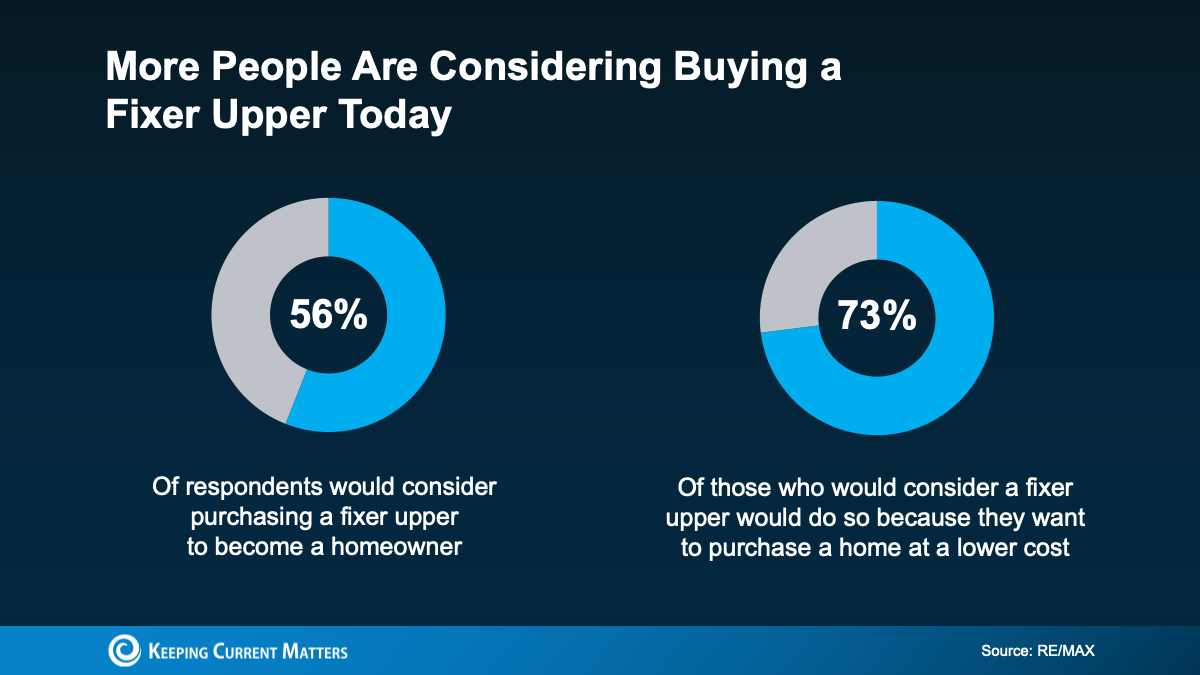 If you’re looking for an option to get your foot in the door, and you’re willing to roll up your sleeves and do a bit of work, a house with untapped potential may be a good option.
Tips for Buying a Home That Needs Some Work
Before you buy a home that may need a makeover, here are a few things to keep in mind:
- Choose a Good Location: You can repair a house, but you can’t change where it is. Make sure the home is in a neighborhood you like or one with increasing property values and a growing number of local amenities. This way, even after you spend money fixing it up, the house will be worth more later.
- Budget for Surprises: Fixing up a house can take more time and money than you might think. Make sure you save room in your budget for unexpected repairs or other unknowns that might come up while you’re working on the house.
- Get a Home Inspection: Before you buy, hire an inspector to check out the house. They’ll help you determine the necessary repairs, so you don’t end up with expensive surprises later.
- Plan Your Priorities: When deciding what to tackle first, it helps to categorize your goals. Think of your home in three ways: the must-haves (essential repairs), the nice-to-haves (upgrades that would make life easier), and the dream-state features (luxuries you can add later). This will help you prioritize and stick to your budget.
Remember, the perfect home is the one you perfect after buying it. By starting with a fixer upper, you have the opportunity to customize a home to your liking while saving money on the initial purchase price. With careful planning, budgeting, and a little bit of vision, you can turn a house that needs some love into your perfect home.
Real estate agents are great at finding homes with potential. They know the local market and can guide you to homes where smart upgrades can add value. With their help, you’re more likely to find a house that fits your total budget and has room for worthwhile improvements.
Bottom Line
In today’s market, where the cost of homeownership can be intimidating, finding a move-in-ready home that fits your budget can feel like a real challenge. But if you’re open to putting in a little work, you can transform a fixer upper into your ideal home over time. A local real estate agent can help you explore what’s possible and find a place that’ll work for you.

by Westford Real Estate Inc | Jan 24, 2025 | Affordability, For Buyers, Inventory
Even though there are more homes available for sale than there were at this time last year, there are still more buyers than there are houses to choose from. So, know that if you’ve got moving on your mind, your house can really stand out.
There are several key reasons why there aren’t enough homes to go around and understanding them will help you see why the market is working in your favor if you’re ready to make a move.
What’s Causing the Shortage?
1. Underproduction of Homes: For years, the industry hasn’t built enough homes to keep up with demand. As Zillow explains:
“In 2022, 1.4 million homes were built — at the time, the best year for home construction since the early stages of the Great Recession. However, the number of U.S. families increased by 1.8 million that year, meaning the country did not even build enough to make a place for the new families, let alone begin chipping away at the deficit that has hampered housing affordability for more than a decade.”
2. Rising Costs: Building materials, labor shortages, and supply chain disruptions caused by the pandemic have all made it harder and more expensive to build homes. This can either limit or stop new home construction in some areas.
3. Regional Imbalances: Some markets are more affected by the shortage of homes than others. Popular and more desirable areas have more people moving in faster than new homes can be built. The number of new building permits issued doesn’t always keep pace with job growth in these regions, and that leads to even tighter markets and higher prices.
How Big Is the Problem?
According to estimates from Real Estate News, the U.S. is facing a housing shortfall of roughly 3.3 million homes, based on an average of several expert insights (see graph below):
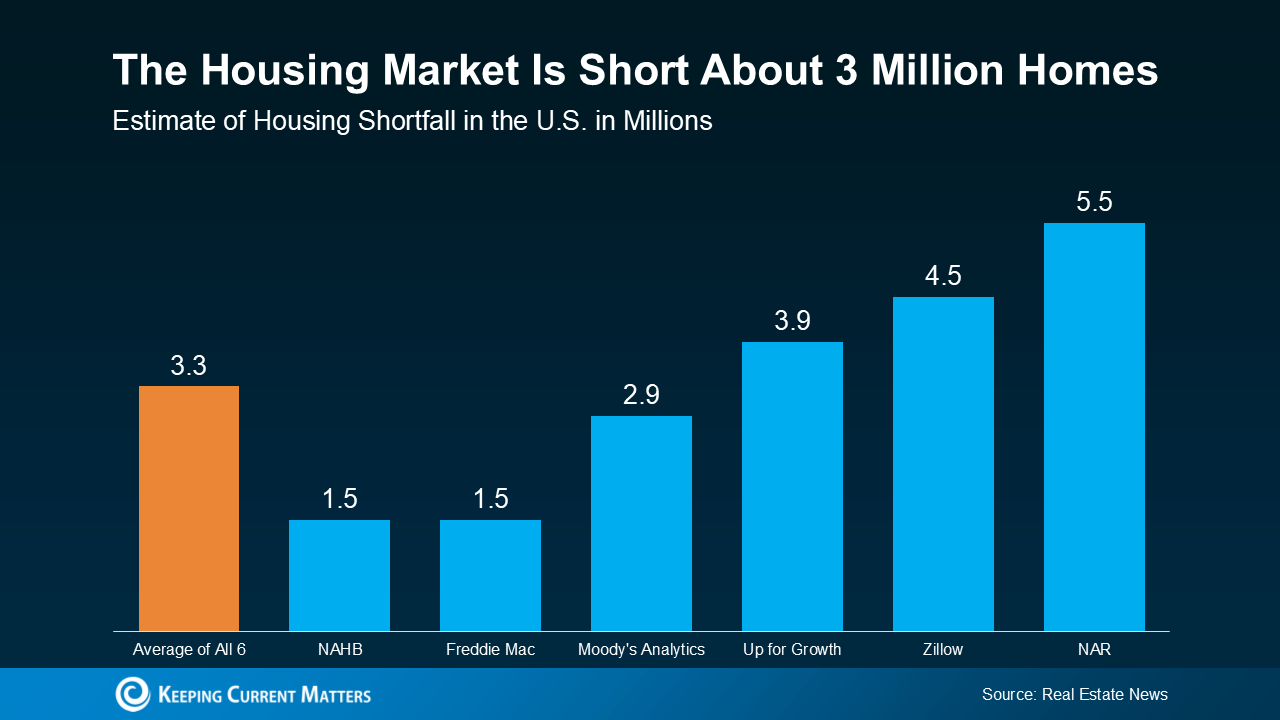 This shows there’s a significant number of homes that need to be built just to meet current demand from buyers. But what about future demand?
According to John Burns Research and Consulting (JBREC), over the next 10 years, the U.S. will need about 18 million new homes to meet projected demand, including homes for new households, second homes, and replacements for aging or unusable homes.
So, even though more homes are on the market compared to last year, there still aren’t enough of them to go around. This is where you can really win if you’re ready to sell your house.
What You Need To Remember
If you’re thinking about selling, the shortage of homes for sale means your house is likely to get some serious attention from buyers. It’ll take years to climb out of this inventory deficit, and the market is still very tight. So, when buyers are competing for relatively few homes like they are right now, that creates more interest in the houses that are on the market, putting upward pressure on prices and ultimately working in your favor.
And since every market is different, it’s important to work with a real estate agent who understands local trends. They can help you price your house right and create a strategy to attract the right buyers.
Bottom Line
While there are more homes for sale than there were at this time last year, there’s still a shortage overall. And this puts you in the driver’s seat as a seller. Reach out to a trusted real estate agent who can help you take advantage of today’s market.
