
by Westford Real Estate Inc | Apr 14, 2025 | Agent Value, Buying Tips, For Buyers
Spring is one of the most active times of year in the real estate world. With more listings, more buyers, and more competition, standing out as a buyer can be a challenge. If you’re planning to purchase a home this season, making a strong and attractive offer is key.
In this article, we’ll break down four smart strategies to help your offer rise above the rest in today’s competitive spring housing market.
1. Get Pre-Approved — Not Just Pre-Qualified
Keyword focus: mortgage pre-approval, home loan pre-approval
Before you start making offers, make sure you’re pre-approved for a mortgage—not just pre-qualified.
Why this matters:
Pre-approval involves a full financial review by a lender and gives sellers confidence that you’re a serious, qualified buyer. It’s one of the easiest ways to boost the strength of your offer.
Pro tip:
Ask your lender for a fully underwritten pre-approval. This gives your offer even more credibility and helps it stand out from others.
2. Make a Strong (and Smart) Offer
Keyword focus: competitive offer, offer above asking price
In spring, homes that are priced right often receive multiple offers. A strategic bid—especially if it’s slightly above the asking price—can make a big difference.
Why this matters:
Sellers are more likely to accept offers that are competitive and demonstrate serious intent. But that doesn’t mean you should overpay.
Pro tip:
Have your agent run a comparative market analysis (CMA) so you can make a smart, informed offer that’s both attractive and financially sound.
3. Limit Contingencies to Make Your Offer Cleaner
Keyword focus: offer contingencies, real estate contingencies
While contingencies protect you as a buyer, too many can make your offer less appealing.
Why this matters:
Sellers prefer offers that carry less risk of falling through. A cleaner offer—one with fewer contingencies—can give you an edge.
Pro tip:
Avoid waiving important contingencies like the home inspection unless you’re absolutely sure. Instead, consider shortening the timelines or removing minor conditions to sweeten the deal.
4. Add a Personal Touch with a Buyer Letter
Keyword focus: home offer letter, personal letter to seller
Sometimes, it’s not all about numbers. Adding a short, heartfelt letter to your offer can make a meaningful impact.
Why this matters:
Sellers are often emotionally connected to their homes. A sincere letter explaining why you love the home can help your offer stand out on a personal level.
Pro tip:
Keep it brief and warm. Focus on what you love about the home and how you envision your life there. Stay positive and respectful—avoid mentioning changes or renovations.
Final Thoughts: Stand Out in the Spring Housing Market
In a busy spring real estate market, you need more than luck to land your dream home—you need a solid strategy. By getting pre-approved, crafting a competitive offer, limiting unnecessary contingencies, and adding a personal touch, you’ll be better positioned to win the home you love.
Looking for guidance on making a winning offer? Partner with a local real estate expert who knows your market and can advocate for you every step of the way.

by Westford Real Estate Inc | Jan 26, 2025 | Affordability, Buying Tips, For Buyers
Looking to buy a home but feeling like almost everything is out of reach? Here’s the thing. There’s still a way to become a homeowner, even when affordability seems like a huge roadblock – and it might be with a fixer upper. Let’s dive into why buying a fixer upper could be your ticket to homeownership and how you can make it work.
What Is a Fixer Upper?
A fixer upper is a home that’s in livable condition but needs some work. The amount of work varies by home – some may need cosmetic updates like wallpaper removal and new flooring, while others might require more extensive repairs like replacing a roof or updating plumbing.
Because they need some elbow grease, these homes typically have a lower price point, based on local market value. In fact, a survey from StorageCafe explains that fixer uppers generally cost about 29% less than move-in-ready homes.
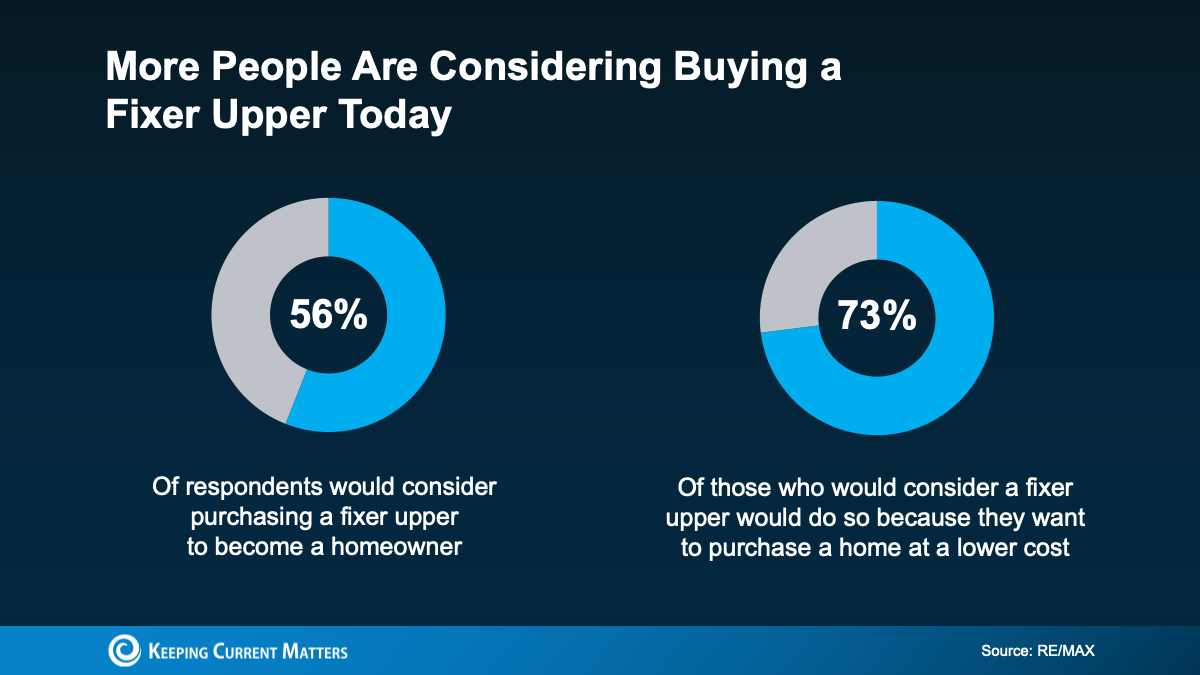
And that’s why, according to a recent survey, more buyers are considering homes that need a little extra work right now (see below):
 If you’re looking for an option to get your foot in the door, and you’re willing to roll up your sleeves and do a bit of work, a house with untapped potential may be a good option.
Tips for Buying a Home That Needs Some Work
Before you buy a home that may need a makeover, here are a few things to keep in mind:
- Choose a Good Location: You can repair a house, but you can’t change where it is. Make sure the home is in a neighborhood you like or one with increasing property values and a growing number of local amenities. This way, even after you spend money fixing it up, the house will be worth more later.
- Budget for Surprises: Fixing up a house can take more time and money than you might think. Make sure you save room in your budget for unexpected repairs or other unknowns that might come up while you’re working on the house.
- Get a Home Inspection: Before you buy, hire an inspector to check out the house. They’ll help you determine the necessary repairs, so you don’t end up with expensive surprises later.
- Plan Your Priorities: When deciding what to tackle first, it helps to categorize your goals. Think of your home in three ways: the must-haves (essential repairs), the nice-to-haves (upgrades that would make life easier), and the dream-state features (luxuries you can add later). This will help you prioritize and stick to your budget.
Remember, the perfect home is the one you perfect after buying it. By starting with a fixer upper, you have the opportunity to customize a home to your liking while saving money on the initial purchase price. With careful planning, budgeting, and a little bit of vision, you can turn a house that needs some love into your perfect home.
Real estate agents are great at finding homes with potential. They know the local market and can guide you to homes where smart upgrades can add value. With their help, you’re more likely to find a house that fits your total budget and has room for worthwhile improvements.
Bottom Line
In today’s market, where the cost of homeownership can be intimidating, finding a move-in-ready home that fits your budget can feel like a real challenge. But if you’re open to putting in a little work, you can transform a fixer upper into your ideal home over time. A local real estate agent can help you explore what’s possible and find a place that’ll work for you.

by Westford Real Estate Inc | Jan 17, 2025 | Buyers, Buying Tips, First Time Home Buyers, Inventory, New Construction
When you’re planning a move, it’s normal to wonder where you’ll end up and what your future home is going to look like. Maybe you’ve got a specific picture of that house in your mind. But unless you came into this process knowing you want to buy a newly built home, you may not have pictured new home construction.
A trusted real estate agent can help walk you through these two reasons you may want to reconsider that.
1. Adding Newly Built Homes Could Give You More Options
There are two types of homes on the market: new and existing. A newly built home refers to a house that was just built or is under construction. An existing home is one a previous homeowner has already lived in. Right now, the inventory of existing homes is tight. But there may be options for you on the new home side of things.
Data from the Census and the National Association of Realtors (NAR) shows that newly built homes are a bigger part of today’s housing inventory than the norm (see graph below):
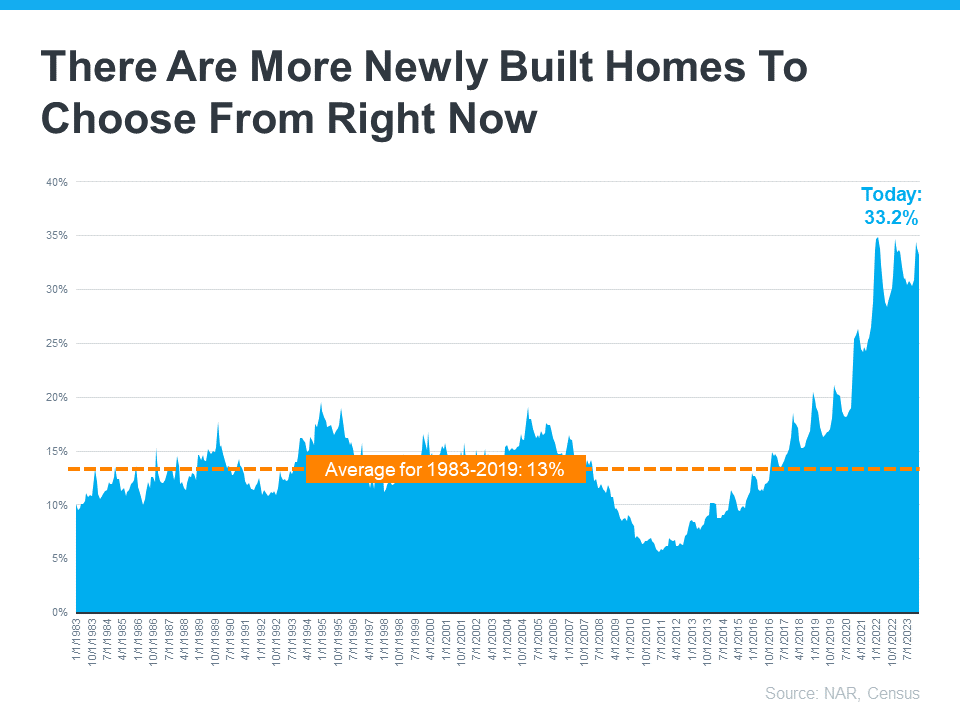
From 1983 to 2019 (the last normal year in the market), newly built homes made up only 13% of the total inventory of homes for sale. But today that number has climbed to over 33%.
Rest assured, after over a decade of underbuilding, builders aren’t overdoing it today. Even with an increase in new construction today, there’s still a significant housing shortage overall. But for you, the uptick in new builds can be a game changer because it gives you more options for your search.
2. Newly Built Homes May Be More Affordable Than You’d Think
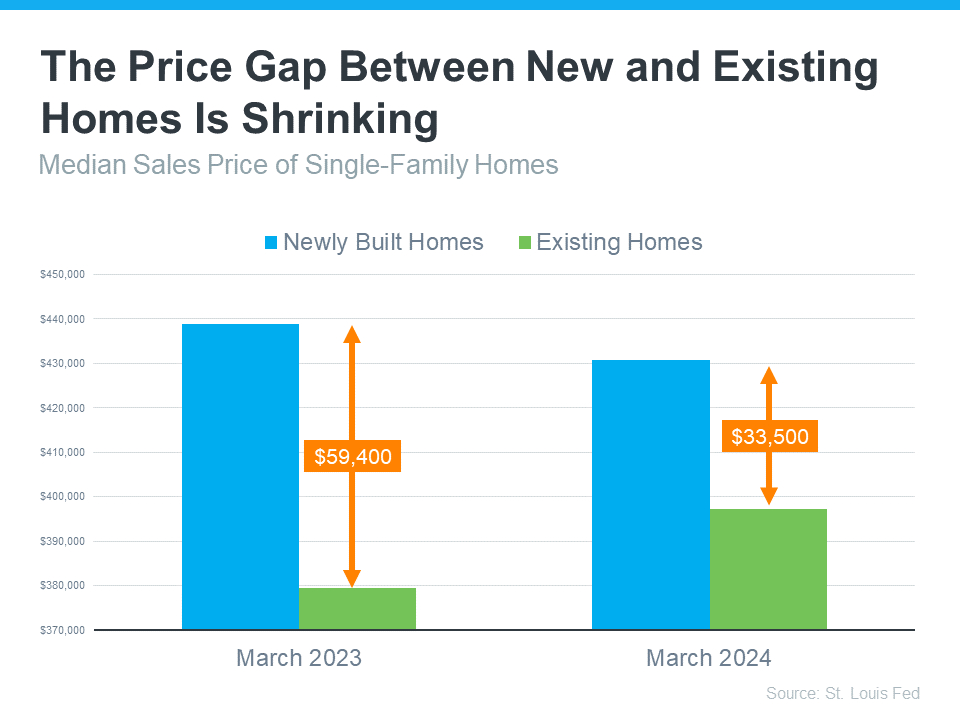
You may still be wondering if a new build could really be an option for you. If you’ve previously written them off because you thought they would be out of your budget, consider this. The price gap between a newly built home and an existing house is shrinking. Here’s why.
Builders are going to build what’s in demand. And they know people need more options right now, especially ones that are smaller and potentially more affordable. So, they’re focusing on building smaller homes at lower price points. The graph below shows the price difference between new and existing homes is shrinking as that happens:
As LendingTree explains:
“In the past, newly built homes have been much more expensive than existing homes — but that gap has been getting smaller recently. In some places today, you may find that the cost to build versus buy is roughly the same.”
And an article from CNBC says:
“While new builds are still sold for slightly more than existing homes, the price gap has significantly narrowed . . .”
Not to mention, some builders are even offering price cuts and mortgage rate buy-downs right now to sweeten the deal. Today there are many reasons new builds may be worth considering. Other buyers sure seem to think so. As Freddie Mac says:
“As the supply of existing homes for sale remains low and home prices continue to rise, more buyers are choosing to purchase new homes than in previous years.”
Just know that buying a newly built home isn’t the same as buying an existing one. Builder contracts have different fine print. So, partner with a local agent who knows the market, builder reputations, and what to look for in those contracts so you have an expert on your side to help you explore this option.
Bottom Line
If you want to find out what builders are doing in your area, connect with a real estate agent. And if you’re willing to cast a wider net to open up your options even more, that agent can talk to you about broadening your search to include other towns nearby.
